Solar Panel Installation in Pakistan: A 2026 Homeowner’s Guide
Solar panel installation in Pakistan has moved from a niche luxury to a mainstream household decision. With grid tariffs climbing and load-shedding still a daily reality in many towns, families now treat rooftop solar as basic infrastructure rather than an experiment. This guide walks a first-time buyer through every stage, from sizing a system to keeping it running for two decades.
My goal here is practical, not promotional. I have watched neighbours over-spend on oversized arrays and under-spend on cheap inverters that failed within a season. The difference between a good outcome and a costly one almost always comes down to planning before purchase.
Why Solar Panel Installation Makes Sense in 2026
Electricity prices in Pakistan have risen sharply, and analysts expect further adjustments through 2026. A well-designed rooftop system typically pays for itself within four to seven years, then delivers nearly free power for the remaining life of the panels.
Sunlight is the country’s most abundant resource. According to the National Renewable Energy Laboratory, regions with high solar irradiance can generate significantly more per installed kilowatt than cloudier climates, and most of Punjab and Sindh sit comfortably in that high-yield band.
The core financial argument
Once your monthly bill crosses a certain threshold, self-generation becomes cheaper than buying from the grid. Net-metering lets you sell surplus daytime energy back, shrinking your bill further and shortening the payback window.
Choosing the Right System Size
Sizing starts with your actual consumption, not a salesperson’s round number. Pull twelve months of bills, note your peak-summer units, and design for that load. Undersizing frustrates you in July; oversizing wastes capital.
Households in fast-growing districts often coordinate with a provider offering solar installation in Rawalpindi to match panel count to real rooftop area and shading patterns. A proper site survey beats any online calculator.
- Small home (1–2 rooms): 3–4 kW covers lighting, fans, and a refrigerator.
- Medium family home: 5–7 kW handles air conditioning for a couple of rooms.
- Large residence: 10 kW and up supports multiple ACs and a comfortable margin.
On-grid, off-grid, or hybrid?
On-grid systems are cheapest and ideal where the grid is reliable. Off-grid suits remote plots with no connection. Hybrid systems add batteries so you keep running during outages, which is why they dominate demand in load-shedding-prone areas.
Comparing Panel and Inverter Options
Not all components age the same way. The table below compares the choices buyers face most often, so you can weigh cost against durability before signing anything.
| Component Choice | Typical Lifespan | Best For | Relative Cost |
|---|---|---|---|
| Monocrystalline panels | 25+ years | Limited roof space, high efficiency | Higher |
| Polycrystalline panels | 20–25 years | Large roofs, tight budgets | Lower |
| String inverter | 8–12 years | Simple, unshaded roofs | Lower |
| Hybrid inverter | 8–12 years | Battery backup, outage resilience | Higher |
Monocrystalline panels now dominate new installs because their higher efficiency squeezes more watts from a small rooftop. If your roof is generous and your budget tight, polycrystalline still delivers honest value.
How Do You Vet a Solar Installer?
This is the question that decides your fifteen-year experience, so treat it seriously. The panels matter less than the people bolting them to your roof and wiring your home.
Ask to see completed projects near you and request references you can actually call. Homeowners comparing quotes for solar installation in Sialkot should confirm the company handles net-metering paperwork, not just the hardware. Good installers behave like dependable specialists: they document everything and stand behind the work.
- Confirm the firm is registered and carries proper warranties.
- Verify the inverter brand and its local service network.
- Get the full bill of materials in writing, wattage included.
- Clarify who files your net-metering application with the utility.
- Read the maintenance and workmanship warranty terms carefully.
Installation Day and What to Expect
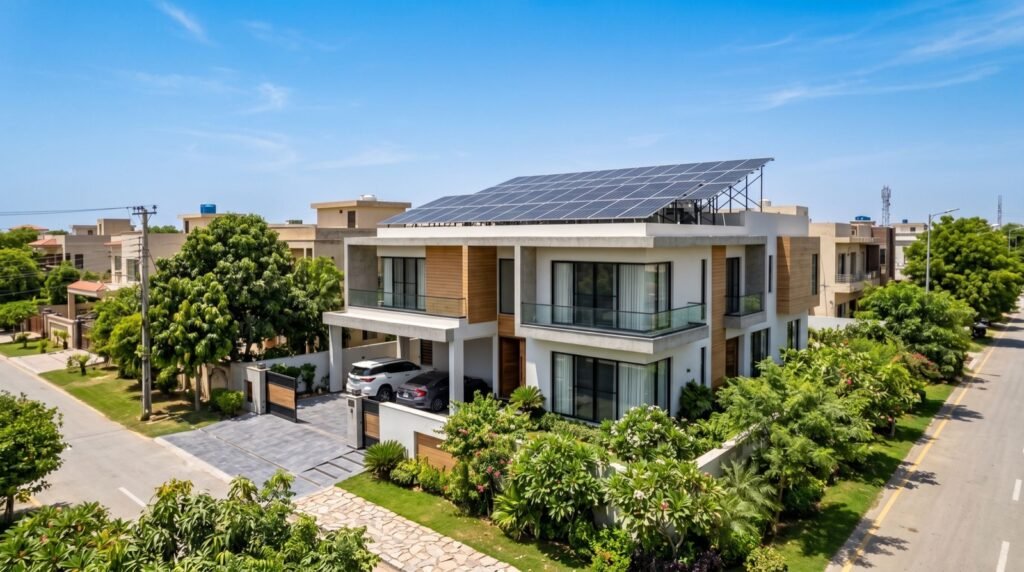
A typical residential job finishes in one to three days. The crew mounts the racking, secures panels, runs DC and AC wiring, sets the inverter, and commissions the system with safety checks.
The net-metering step
After commissioning, your installer submits the net-metering request to your distribution company. Approval and meter replacement can take a few weeks, so plan for a short gap before you start exporting surplus energy.
Maintenance That Protects Your Investment
Solar is refreshingly low-maintenance, but “low” is not “none.” Dust is the enemy in much of Pakistan, and a dusty panel can lose a meaningful slice of output.
- Rinse panels every few weeks during dry, dusty months.
- Check inverter readings monthly to catch drops early.
- Inspect mounting bolts and cable clips once a year.
- Keep the inverter area ventilated and free of pests.
Modern hybrid inverters log performance data you can read from your phone, so a sudden production dip is easy to spot and fix before it costs you real money.
Frequently Asked Questions
How long does solar panel installation take?
Most residential systems are installed in one to three days. Net-metering approval afterward can add a few weeks depending on your utility’s processing queue.
Will solar work during load-shedding?
Only a hybrid or off-grid system with batteries keeps powering your home during an outage. A basic on-grid system shuts off for safety when the grid goes down.
How much roof space do I need?
As a rough guide, each kilowatt of monocrystalline panels needs roughly 60 to 70 square feet of unshaded roof. A 5 kW system therefore wants about 300 to 350 square feet.
Are the panels safe on my roof structure?
Yes, when installed correctly. A competent crew assesses your roof’s load capacity and uses rated racking so the array withstands wind and weather for decades.
Conclusion: Start Your Solar Journey the Right Way
Solar panel installation in Pakistan rewards buyers who plan first and shop second. Size the system to your real usage, choose quality components, and above all pick an installer who documents the work and handles your net-metering. Do that, and you lock in cheaper, cleaner power for twenty years or more.
Ready to move forward in 2026? Gather your last twelve bills, book a proper site survey, and get a written quote you can compare line by line. The sun is free — your job is simply to capture it well.